
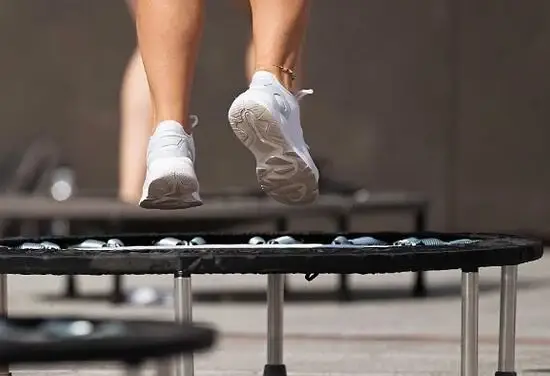
Can you wear shoes on a trampoline?
On the surface, it seems like a simple question. But when you factor in trampoline design, material wear, joint impact, and safety, the question becomes far more nuanced.
Here’s The Answer: Wearing shoes on a trampoline can damage the mat, reduce bounce control, and increase injury risk. While shoes may offer warmth or support, barefoot or grip socks are safer, preserve your trampoline and protect your joints.
This guide isn’t here to guilt you into barefoot bouncing or scare you away from cold-weather jumping. It’s here to lay out the facts, so you can make the best choice for your family, your gear, and your feet.
Let’s jump in.
Shoes on a Trampoline: The Pros & Cons You Need to Know
Most people assume that wearing shoes on a trampoline is either completely safe or entirely forbidden but the truth is, it depends on the context. There are legitimate reasons someone might consider keeping their shoes on, especially in colder climates or unconventional setups.
✅ The Pros of Wearing Shoes
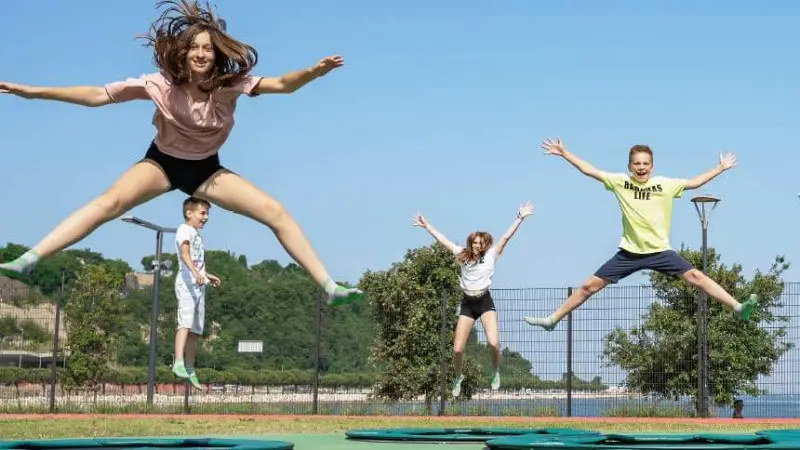
Let’s start with the upside. There are moments when wearing shoes might make sense, though it’s key to know that this is the exception, not the rule.
🦶 Support for Ankles and Feet
For longer jump sessions, particularly on smaller rebounders during rebounding sessions, shoes with soft, flexible soles can offer additional support. This is particularly helpful for adults dealing with foot pain or stability concerns. But keep in mind: most backyard trampolines aren’t designed to absorb that kind of impact from footwear.
🧊 Extra Grip in Slippery Conditions
When the mat is damp or has a bit of morning frost on it, certain athletic shoes might seem to provide better traction than socks. But this can be misleading; rubber soles grip unevenly on synthetic trampoline mats and often reduce your ability to respond dynamically to bounce.
🧦 Insulation in Cold Climates
There’s no question that cold weather introduces a comfort issue. Shoes can help insulate your feet and protect them from the icy bite of a winter mat. However, the real issue in cold climates isn’t just the temperature, it’s moisture, and shoes often do a poor job keeping feet dry once snow begins to melt on contact.
❌ The Risks of Wearing Shoes
Now for the part most people don’t consider until it’s too late. Here’s why we don’t recommend shoes for general trampoline use.
🧵 Can Damage the Mat
Even soft-soled shoes can degrade the jumping surface over time. All it takes is one small rock caught in a tread to scratch, scuff, or tear a mat. And if you’re using a premium performance mat like Akrobat’s AkroVENT® surface, the last thing you want to do is compromise that durability with unnecessary abrasion.
🦴 Increased Risk of Injury
Shoes can restrict your natural foot movement, making it harder to adjust mid-bounce. That small difference in articulation can lead to awkward landings, rolled ankles, or extra strain on your knees and hips, especially on higher-performance trampolines that deliver more vertical lift.
🛑 Voids Warranties for Premium Trampolines
This is a big one. Many premium trampoline manufacturers (ourselves included) clearly state no shoes on trampolines. That’s not a scare tactic, it’s because shoe use changes the force dynamics on the springs, mat, and stitching. If the wrong footwear causes damage, it’s not a product defect, it’s misuse.
🔄 Less Bounce Control
Jumping barefoot or in grip socks allows your foot to flex and respond to each rebound naturally. Shoes, by contrast, add a layer of padding and stiffness between your foot and the mat, dulling your proprioception and reducing control. This is particularly risky for gymnasts or trick jumpers who rely on precision.
So, if you absolutely must wear shoes, make sure they’re soft, clean, and designed for low-impact use. But for 95% of jumpers, barefoot or grip socks will give you better safety, better performance, and a longer trampoline life span.
The Trampoline Type Matters More Than You Think
The debate around wearing shoes on a trampoline often skips over one of the most important variables: the type of trampoline you’re using. Not all trampolines are built the same and footwear that might be “okay” in one scenario can be a fast track to damage or injury in another.
In-Ground vs. Above-Ground Trampolines
⬇️ In-Ground Trampolines
In-ground trampolines sit flush with the ground, meaning the distance between the jumper and the surface around them is significantly reduced. That makes a big difference when you factor in the instability shoes can introduce. If a jumper wearing shoes lands off-balance or at the wrong angle, the risk of injury is lower on an in-ground model simply because they’re closer to the ground.
🧱 Above-Ground Trampolines
Traditional above-ground trampolines may be more popular. Many mass-market options use thinner jump mats and budget-grade spring systems that weren’t designed to absorb the added pressure of shoes. Add a little dirt or grit from a shoe tread, and now you’re dealing with the potential for tears, rapid wear, and compromised bounce performance.
An above-ground trampoline might look similar at a glance, but once a shoe lands on the mat with force, the difference in build quality becomes crystal clear.
Premium Mats Like AkroVENT® vs Budget Mats
🧬 AkroVENT®: Engineered for Safety, Built for Barefoot
We developed the AkroVENT® mat for one reason: to create the ideal barefoot bounce. It delivers 62.7% softer bounce absorption, which means less strain on growing joints and a smoother landing with every jump. More importantly, the surface itself is grip-enhanced (not slippery, not stiff) making it ideal for socked or barefoot use without sacrificing performance.
You can feel the difference the first time you launch off an AkroVENT® surface. It’s quieter, softer, and way more responsive.
⚠️ Budget Mats Don’t Hold Up
Lower-cost trampolines may seem to get the job done for a season or two, but they’re not made to withstand the repeated stress that shoes introduce. Most don’t come with certified padding, UV protection, or reinforced stitching. And if they tear, the whole jumping experience goes downhill fast.
The type of trampoline you use should absolutely influence your decision about footwear.
Winter Jumping? Here’s How to Keep Your Feet Warm (Without Breaking the Rules)
Let’s talk about one of the most frequent reasons people ask if they can wear shoes on a trampoline: winter. When the mat’s frozen and your toes are going numb just thinking about stepping outside, shoes seem like the obvious choice.
What Cold-Climate Jumpers Recommend
The good news? There are smart ways to keep your feet warm without sacrificing safety or voiding your warranty.
🧦 Wool Socks Under Grip Socks
Start with a thin layer of merino wool or thermal socks. Then add an oversized pair of grip socks designed for trampolines. This two-layer system locks in warmth while still allowing you to maintain traction on the mat. Just make sure the outer pair has solid grip, slipping is a real risk in cold conditions.
🧪 DIY Silicone Grippy Socks
Here’s a simple trick we’ve seen work wonders: take a thick pair of socks and apply lines or dots of silicone sealant to the bottom. Let them cure overnight. This creates a non-slip surface that’s surprisingly effective on cold mats. It’s not a substitute for commercial-grade grip socks but it’s a useful hack when the temperature drops and the stores are closed.
☀️ Jump During Peak Sunlight Hours
You’d be amazed what a little direct sunlight can do. On a clear winter day, trampoline mats can heat up by 5 to 10 degrees Farenheit just from solar exposure. Schedule jump sessions for mid-afternoon, when the surface has had time to warm up and frost has burned off. Every degree helps.
🌬️ Prioritize Wind Protection
The cold doesn’t always come from below, it comes from windchill. Dress in windproof layers, especially over your legs and feet. Wind blockers around the trampoline (like privacy fencing or low hedges) can also help create a more comfortable microclimate around the jumping area.
Why Shoes Still Don’t Solve the Cold Problem
Now here’s the part most people don’t think about until they’re ankle-deep in regret, literally.
💧 Snow Melts in Shoes
When shoes hit a snow-covered trampoline mat, they melt the snow on contact. That water seeps into socks, soaks through the lining, and turns your feet into ice blocks. Now you’re not just cold, you’re wet and miserable. Worse, the moisture compromises your grip, whether you’re wearing shoes or not.
🥾 Heavy Footwear Kills Bounce Control
Winter boots, hiking shoes, even basic sneakers, they all add bulk and stiffness that throws off your jump rhythm. They mute your connection with the mat, reduce balance feedback, and make it harder to land softly. That’s a big deal, especially for kids or beginners who are still developing coordination.
📄 Warranties Don’t Cover Winter Misuse
Winter jumping is fine if the mat is clear, the frame is maintained, and you avoid damage. Shoes add force and friction that can void your warranty fast. And if snow accumulates in the pit of an in-ground trampoline and compresses under heavy shoes, that’s a recipe for costly repairs.
So yes, winter jumping is absolutely possible but it’s with technique. With the right socks, smart layering, and a well-built trampoline, you can enjoy year-round bounce without compromising safety, comfort, or your investment.
So, Can You Wear Shoes on a Trampoline?
The reality is that wearing shoes on a trampoline introduces more problems than it solves. While shoes might seem helpful for warmth or support, they also bring significant downsides: mat damage, joint strain, reduced control, and warranty issues. And unless both your trampoline and your footwear are designed for this kind of impact and friction (hint: most aren’t), you’re better off going another route.
We build trampolines that make you want to go barefoot, because the surface itself is designed for comfort, control, and confidence. So if you’re cold? Layer your socks. If you’re nervous? Add an enclosure. But if you want to protect your trampoline (and your body) kick off your shoes and let the mat do what it was built for.
Why Choose AkrobatUSA?
✅ AkroVENT® Jump Mats: 62.7% softer bounce, optimized for barefoot and grip sock use
✅ In-Ground & Above-Ground Options: Built for safety and flexibility
✅ Non-Toxic, Certified Materials: Safe for all ages
✅ Fewer Tool Assembly: Easy setup with our AkroCLICK® system
✅ Industry-Leading Warranty: Because your investment should go the distance
📦 Shop Now and find your best trampoline, or contact us for help selecting the right fit for your climate, yard, and family needs.
