
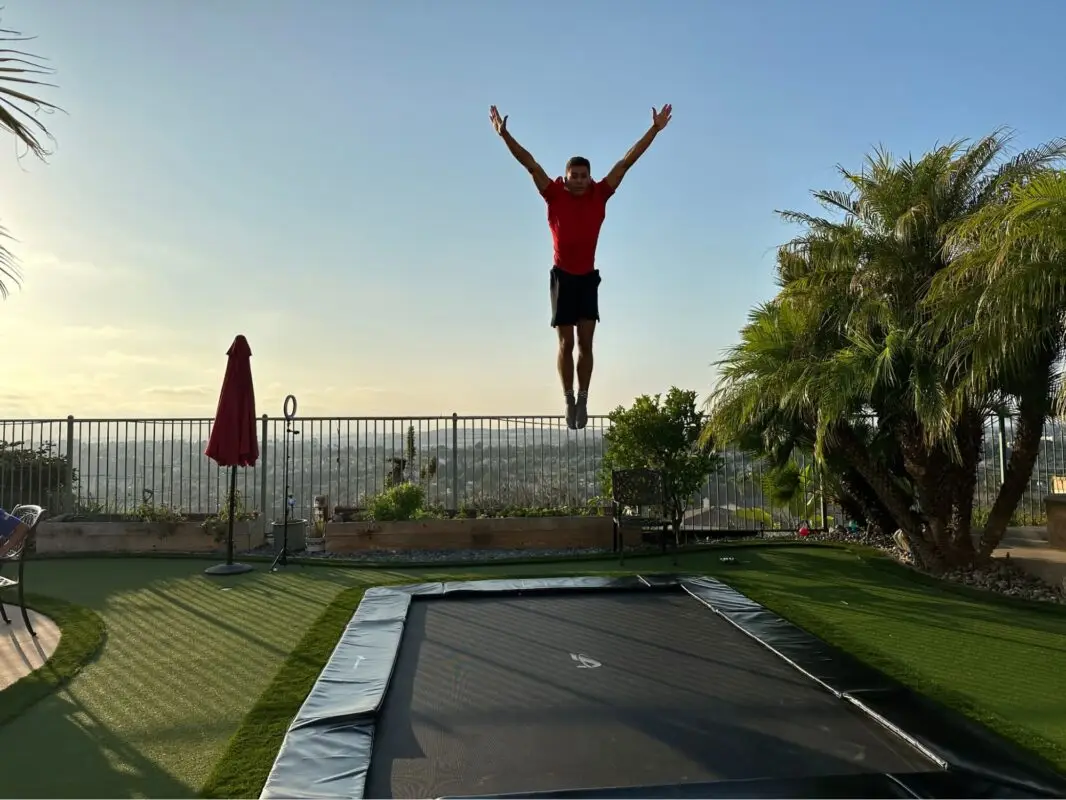
When families, athletes, or thrill-seekers come to us asking how to jump higher on a trampoline, we’d tell them that achieving higher jumps is about knowing well how your body interacts with your equipment; how timing, form, and even the air beneath your feet all work together to propel you skyward.
In this guide, we’ll walk you through everything you need to know: the science behind trampoline bounce, the mistakes that hold most jumpers back, the exercises that will power up your takeoff, and the equipment upgrades that make a measurable difference.
If you’re ready to leave the ground with confidence, control, and a whole lot more airtime, you’re in the right place.
How to Maximize Your Bounce: Body and Technique
We’ve learned over years that your body mechanics are just as key as your equipment when it comes to achieving serious jump height.
It doesn’t matter if you’re using the world’s best trampoline (though we’d argue Akrobat makes that!), if your form is off, you’re leaking power with every bounce.
Mastering Takeoff Form
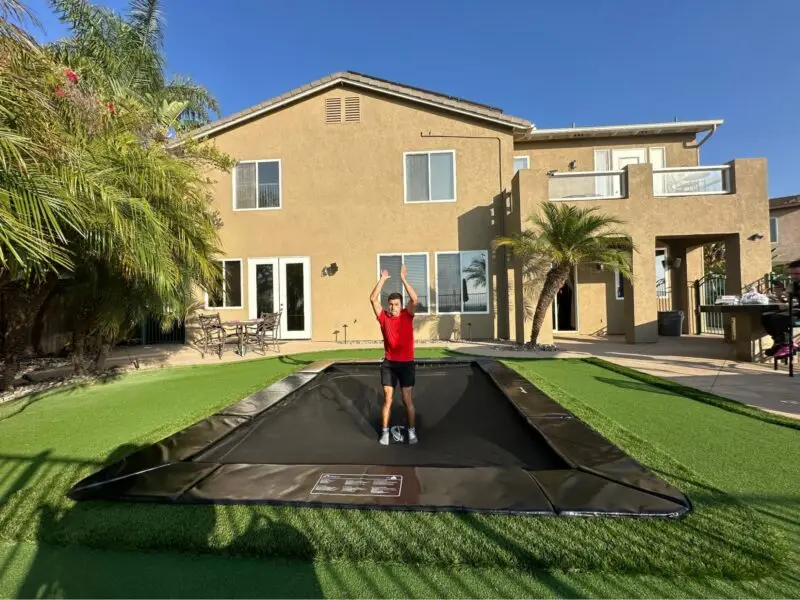
Start with where you’re jumping. On a rectangular trampoline, the power is evenly distributed across the entire surface, unlike round models, where the center is the strongest spot. This means you can achieve high, consistent bounces whether you’re near the edges or jumping in the middle.
Next, focus on your body. Engage your core muscles to keep your body stable and upright in the air. This reduces wasted motion and directs more energy into vertical lift.
Finally, add your arms. Coordinated arm swings during takeoff act like a springboard, adding momentum and balance. Picture an Olympic diver leaping off the board, the arms aren’t passive; they drive the body upward. The same applies here.
Timing and Rhythm for Height
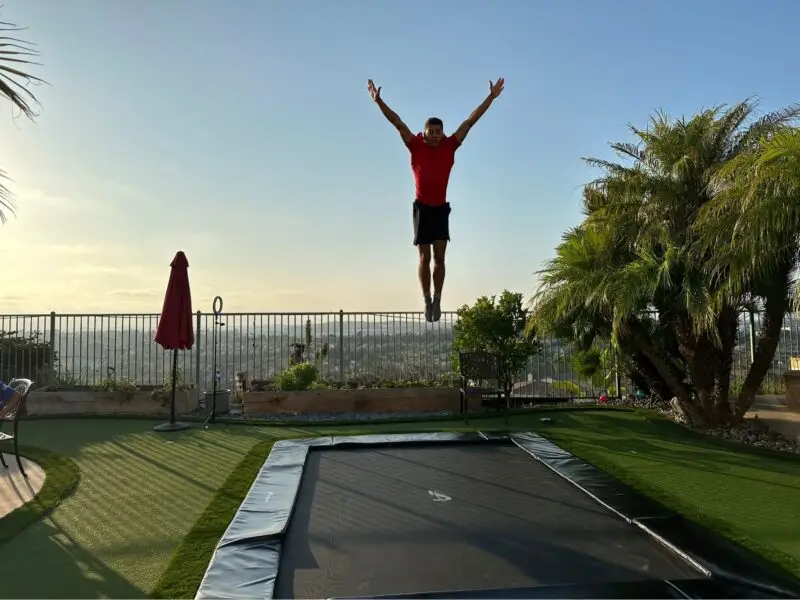
National Trampoline Champion Max Poveda shows Perfect Form.
Jumping is also about timing and rhythm.
Synchronizing your knee bend, leg extension, and arm swing helps you harness the trampoline’s recoil for maximum lift. If you push too early or too late, you miss the spring’s peak power. Get it right, and you ride the energy wave effortlessly upward.
Landing Techniques to Protect Energy
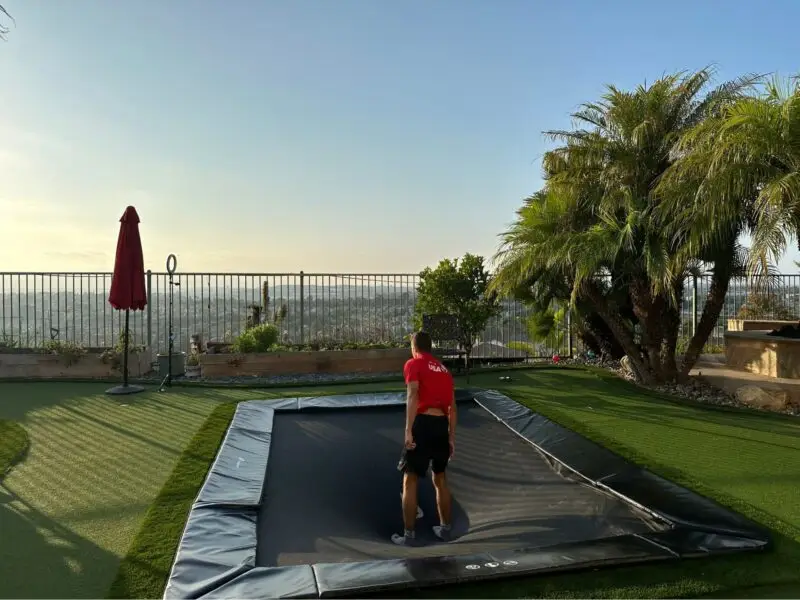
What goes up must come down, and how you land is just as key as how you take off.
To preserve trampoline spring energy (and your joints), aim for light, controlled landings. Land with slightly bent knees, absorb the rebound gently, and avoid heavy, stomping impacts that not only drain your bounce power but also increase wear on your equipment.
Treat every jump like a dance with the trampoline; coordinated, mindful, and balanced. When you master these body mechanics, you’ll discover how much higher you can soar.
Equipment Matters: Choosing the Right Trampoline
Let’s walk through the key design choices that affect how high you can go.
Round vs. Rectangular for High Jumping
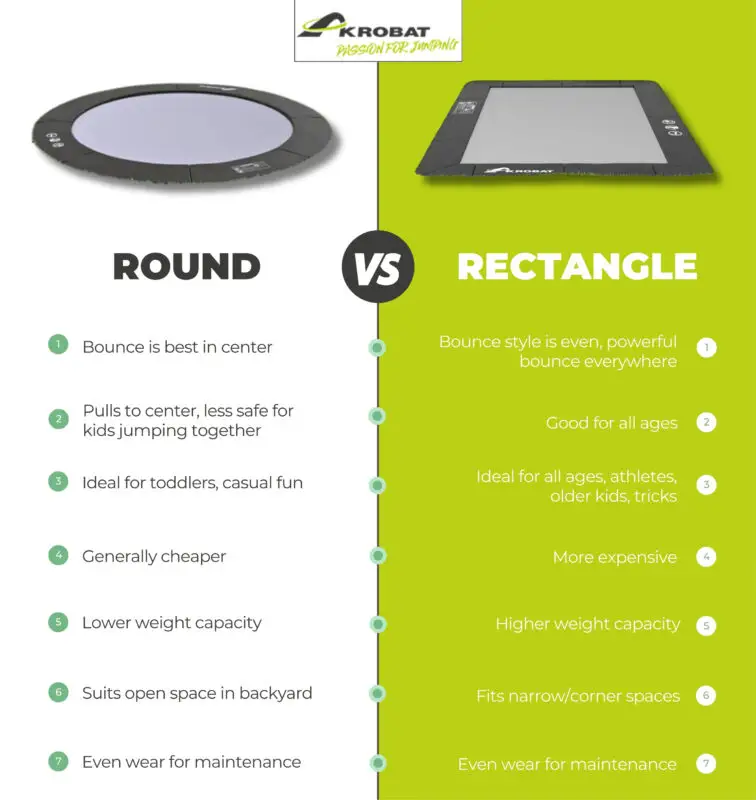
If you’re using a round trampoline, you’re working with a system that naturally pulls jumpers toward the center. This design is fantastic for casual fun, offering a centralized bounce zone that suits beginners well.
Rectangular trampolines, on the other hand, distribute spring tension evenly across the surface. This creates a more consistent, powerful bounce no matter where you land, making them the preferred choice for advanced jumpers, gymnasts, and athletes looking to maximize height.
So which is better: round or rectangular? For raw vertical performance, rectangular trampolines win but for families or beginners focused on mastering fundamentals, round models offer plenty of bounce with added safety.
In-Ground vs. Above-Ground Setups
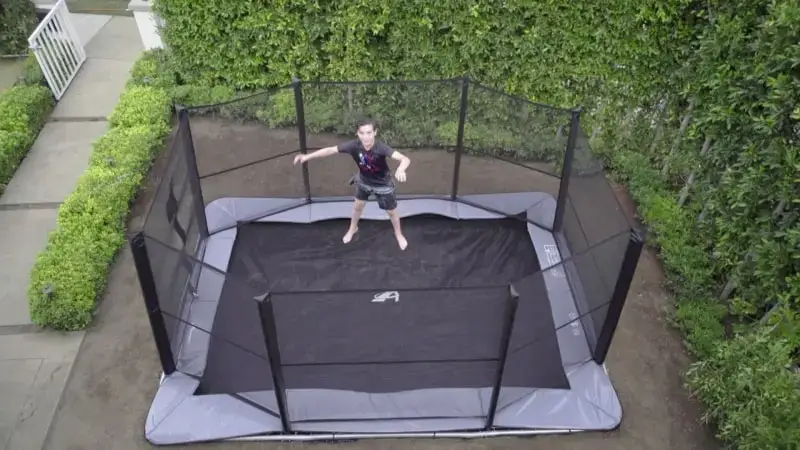
Another choice many overlook is whether to install an in-ground or above-ground trampoline.
In-ground trampolines sit flush with your lawn, offering a stable, grounded platform that eliminates the need for ladders and reduces fall risks. Without the visual barrier of an above-ground frame, you can focus fully on form, height, and tricks.
Above-ground trampolines remain popular for their easier installation and portability, but if you’re chasing maximum jump performance, in-ground setups offer unmatched stability.
🏆Best Pick: 17ft x 12ft XCITYX Largest In-Ground Trampoline
Off-Trampoline Exercises to Increase Jump Power
Off-trampoline training plays a huge role in building the strength, control, and explosiveness that translate into next-level bounce. Let’s break it down.
Strength Workouts That Complement Bounce
You’re asking the right question: What exercises off the trampoline help most?
The answer lies in three core areas:
- Plyometrics: Jump squats, box jumps, and bounding exercises train your fast-twitch muscle fibers, improving leg power and explosive push-off.
- Leg Presses and Weighted Squats: These build foundational strength in the quads, hamstrings, and glutes, giving you the muscle reserve to drive harder against the mat.
- Core Work: Exercises like planks, hanging leg raises, and Russian twists strengthen your midsection, providing critical stability during takeoff and in-air control.
Together, these routines boost your vertical potential before you even step onto the trampoline.
Training Programs for Competitive Athletes
For gymnasts, divers, snowboarders, and extreme sports athletes, generic workouts won’t cut it. These athletes benefit from structured programs that combine trampoline drills with land-based strength, flexibility, and balance training.
But, if you want to train like an athlete, a well-rounded routine might include:
- Plyometric circuits 2–3 times per week.
- Strength training focused on legs and core.
- Flexibility work to support clean, controlled landings and body shapes mid-air.
- Sport-specific drills that simulate aerial awareness (a key advantage for tricks and flips).
Akrobat trampolines are trusted by professional training centers globally because we know the demands of high-performance athletes and we build equipment that supports them.
Avoiding Overuse Injuries
One of the most popular worries we hear is: If I practice too often, am I risking knee or ankle damage?
The answer is: only if you ignore recovery.
Jumping is a repetitive, high-impact activity even on low-impact surfaces like AkroVENT® mats. To avoid overuse injuries, balance your trampoline sessions with:
- Rest days to allow tissue repair.
- Cross-training to strengthen stabilizing muscles.
- Proper warm-ups and cool-downs to keep joints supple.
Our Akrobat trampolines are designed to reduce joint stress (with 62.7% softer bounces compared to standard mats), but smart practice habits are always your first line of defense.
When you combine intentional off-trampoline training with expert-level equipment, you create a system that supports higher jumps, stronger bodies, and ideal performance over the long term.
Advanced Tips: From Tricks to Vertical Mastery
Once you’ve dialed in your form, equipment, and strength, you might feel ready to level up your skills with flips, twists, and aerial maneuvers. But here’s our advice: don’t rush it, and never skip proper training.
Practicing Flips, Twists, and Aerials
High-level moves are thrilling but they’re also risky without the right foundation. We strongly recommend practicing advanced tricks under professional supervision, especially when you’re first learning.
Make sure your equipment can handle the demands: Akrobat trampolines are built to competition-grade standards, offering even bounce distribution, strong frame support, and quieter, distraction-free jumps that create the ideal environment for learning new maneuvers.
Do Tricks Actually Improve Jump Height?
While flips and twists don’t inherently increase your vertical leap, they develop muscle control, aerial awareness, and precise timing: all critical for making the most of your bounce. Tricks force you to engage your core, coordinate your limbs, and find your rhythm, which feeds back into cleaner, more powerful vertical jumps.
So, learning tricks won’t replace your jump training but it can sharpen the skills that take your bounce to the next level.
Why Premium Gear Boosts Performance
Not all trampolines are built alike. Akrobat engineers every model to outperform mass-market brands in ways that matter directly to your bounce.
- Our AkroVENT® mats reduce air resistance by up to 70%, letting you slice through each jump with less drag. That translates to smoother, higher lifts with less effort.
- Our quiet bounce systems address a frequent frustration: squeaky, noisy mats that break your concentration. By minimizing noise and vibration, we help you stay focused and in rhythm, no distractions.
- Finally, our trampolines are built to last. With heavy-duty steel frames and springs tested to withstand 2.5 million jumps, Akrobat models maintain top-tier bounce quality year after year.
Here’s what we want you to remember: achieving maximum jump height is the combination of smart technique, equipment, intentional training, and consistent care that lifts you higher and unlocks the full joy of trampoline performance.
If you’re serious about improving your jumps, your tricks, or your overall trampoline game, we got you.. Together, we can help you soar higher, with confidence, power, and unmatched performance.
